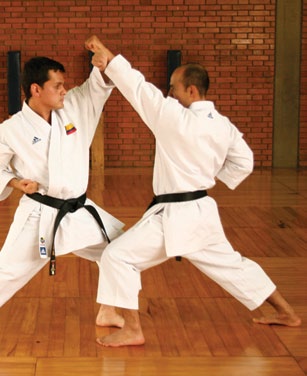
Sometimes, in martial arts you are facing an opponent, that clearly you should have no chance in winning. He is better in skill, more versatile and even quicker than you. He is even more experienced and has developed into a champion in no time. Your odds aren’t good, but there is still a chance to win with a perfect tactic. What could that be?
In sales, you might meet a person, who has much better knowledge on your business field. She has worked for years and has a great team supporting her. She has bought similar products and services and is highly valued among her colleagues from different companies. How to close a deal, when she clearly knows more than you and really into her business? You can’t afford to go down on price, what other options do you have?
Master knows the solution
 My master in martial arts, explained me years ago about a tactic that not so many use in these kind of situations. He told me a story about the best goalkeeper in the world and how to score a goal against him. Often, coaches say that shoot as many times as possible and you will eventually score a goal. If you, as a hobby player, get a chance to shoot against a real pro, for instance, a goalie from NHL, you will not score, even if you get a chance to shoot 100 pucks. He will not make a mistake, because he has trained his whole life and the level his goalkeeping is so high, that by just trying, you will not succeed. Not even, if you try harder.
I was really surprised about how the story was going. I always thought, that you should just try harder and in the end, you would succeed. He asked me: “what technique would you use?” I answered: “I don’t know”. He continued: “you are right. You don’t know and that is the trick”. Then he explained that against the best opponent, you shouldn’t think about your technique, but make him insecure about his. You should try to dribble, use fake attacks and make all kinds of movements, but not really attack before you have made him nervous. The best fighters (and goalies in his example), need a feeling of winning and if you can challenge that, they become insecure. A goalie with no shots coming, doesn’t have a feeling of winning and gets frustrated. His head will turn against him in the long run and you have to be patient to get to that point.
How to apply the method in sales
 In sales, don’t worry about your knowledge, challenge the knowledge of the buyer. Ask good questions and continue the discussion. Make new questions, based on the answers given and push the conversation further. Try to get to the limit of her knowledge and still push further (the questions have to be good and challenging) This will make the buyer more insecure of her knowledge and she will start to think that you know more than she does or at least that you have something that she doesn’t know about. She will end up by asking for your help. That is the right time to offer your solution and she will buy it. Too often, junior sales people start to talk about his solution and not getting the buyer thinking and questioning her knowledge. That kind of sales meeting will not result in sales and the buyer will not start trusting you as a service provider. In business, one way to build trust is to show that you have something that she needs. One way to build this need is to make her question her current solution.
What do you think? Can you pull this off? I have tried it many times in fighting and in sales. Sometimes I have succeeded, but not always. It sounds a lot easier than it is, but if you don’t try this method, you will not win an opponent who is much better than you. What do you got to lose?
 In sales, don’t worry about your knowledge, challenge the knowledge of the buyer. Ask good questions and continue the discussion. Make new questions, based on the answers given and push the conversation further. Try to get to the limit of her knowledge and still push further (the questions have to be good and challenging) This will make the buyer more insecure of her knowledge and she will start to think that you know more than she does or at least that you have something that she doesn’t know about. She will end up by asking for your help. That is the right time to offer your solution and she will buy it. Too often, junior sales people start to talk about his solution and not getting the buyer thinking and questioning her knowledge. That kind of sales meeting will not result in sales and the buyer will not start trusting you as a service provider. In business, one way to build trust is to show that you have something that she needs. One way to build this need is to make her question her current solution.